BLOGGER TEMPLATES AND TWITTER BACKGROUNDS

Friday, August 30, 2013

Boy of the Van Rensselaer Family

This story dates from the earliest days of the community's life. Slavery was an integral feature of Albany's first 200 years. Beginning during the New Netherland period, and becoming widespread during the latter part of the eighteenth century, slavery lasted until 1827 when it finally was eradicated by law in New York State. We believe that slavery in Albany reached its peak in 1790 when 572 slaves were counted as residents - placing at least one African ancestry person in almost a third of the city's 573 households.

Among the most often discussed yet least understood parts of the early Albany story concern the roles of those of African ancestry in the growth and development of the pre-industrial city. Early Albany Timeline

This engaging portrait entitled "Boy of the Van Rensselaer Family" is thought to have been painted by limner John Heaton probably during the 1730s when the artist was living and working in Albany. It is unique in the visual record of early Albany.

The lives of Dinnah Jackson - Albany's first African ancestry matriarch; Benjamin Lattimore - a Revolutionary war soldier; and Captain Samuel Schuyler - a skipper and entrepreneur, represent our hope for making the African presence a regular part of the early Albany story.

But who were the people of colonial Albany? What were their names? Where did they come from? And how did they live? These are the basic questions asked by the historians at the Colonial Albany Social History Project each and every day!

Albany was a place where outsiders came to obtain goods and supplies and to have their broken tools and implements repaired. This tradition began during the New Netherland era when the community's principal activity involved trading for furs with Native Americans who came to Albany and its antecedents,

From the beginning, Europeans found procuring the skins of fur-bearing animals to be the one of the quickest and easiest ways to turn the natural bounty of the North American wilderness into profits and wealth. This premier economic activity was called the "Fur Trade," the "Indian Trade," or simply "the Trade!" The native inhabitants of Albany at the time of the arrival of the Dutch called the Normans Kill the Tawawsantha.[2] The area of Albany had been given different names by the various native tribes to the area. The Mohegans called it Pem-po-tu-wuth-ut, which means "place of the council fire" and the Iroqouis called it Sche-negh-ta-da, meaning "through the pine woods".[3]

Colonial Albany was one of the oldest American communities. From the time fur traders began to come together north of Fort Orange during the 1640s, the resulting concentration of human and economic resources fed ambition and fostered enterprise. By the time Beverwyck became Albany in 1664, the first generation New Netherland Dutch had emerged at the commercial center of a developing market region defined by the Hudson and Mohawk River valleys.

In early Albany, these descendants of the fur traders invested profits in land and sold country products and imported items to the settlers of an expanding countryside. Sometimes they owned mills, processing facilities, storehouses, and ships. Some of these businessmen had direct connections to overseas markets and resources.

basic training in social history research.

Wednesday, August 28, 2013

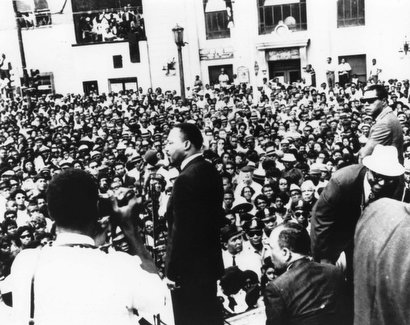
Martin Luther King Jr.’s ‘I Have a Dream’ speech: 50th anniversary of the March on Washington.


Boston Globe


The late Photographer Jack T. Franklin was known as the Gordon Parks of Philadelphia. 


African-American Museum in Philadelphia.


Rare photos of the March on Washington
Philadelphia-based photographer Jack T. Franklin was just a teenager when he first picked up a camera. Born in 1922, Franklin served as a photographer in the U.S. Army during WWII and later spent decades as a freelance photojournalist documenting social and political issues, including the civil rights movement. 
Franklin passed away in 2009. Thousands more of his images of African-American life are held in
the permanent collection of the African-American Museum in Philadelphia.


Sunday, August 25, 2013

CoderDojo Coolest Projects - the coder - young people learn how to be creators not just users

Inspiring Young Coders & Supporting Coding Clubs 

Start a Dojo today
Girls that code could help fix skills shortage bugging tech 
Start-A-Coderdojo
Gates and Zuckerberg may only reinforce the notion of the coder being a geeky and socially awkward male. Some parents wouldn’t consider that their daughters could actually be coders, too. In fact, some believe encouraging them to learn how to write software could transform the socio-economic fabric of the world.

In recent weeks, Sheryl Sandberg, chief operating officer of Facebook and author of Lean In: Women, Work and the Will to Lead, told an audience in Pennsylvania: “A lot of kids code because they play games. Give your daughters computer games. Ask them to play them.” Giving kids this early start in computer science will pay off for the economy in the long run, Sandberg said.

Two-year-old CoderDojo movement, which James Whelton, a then-teenager from Cork, kickstarted to teach kids how to write software. The movement has since grown to see more than 16,000 kids in 26 countries gather to learn to how to write software on any given Saturday.


On the other side of the US, in San Francisco, California, Kimberly Bryant, an engineer, recognised that software had been creating new economies. Girls, in particular, were in danger of being left out, however.

Bryant founded Black Girls Code in 2011 to meet the needs of young black women who were underrepresented in the technology world, focusing on girls between the ages of 7 and 14. The movement is now active in seven US cities, as well as Johannesburg, South Africa. Every month, 1,000 girls learn the lingua franca of the 21st century.

“I founded Black Girls Code from my desire as a mother to find opportunities for my 12-year-old at the time to learn about computer programming and to make something rather than just playing video games,” Bryant said.

“I was looking for opportunities for her to grow and find out what her own interests and passions were around technology.”

Black Girls Code Founder Kimberly Bryant Gets White House Nod

Kimberly Bryant: I personally became interested in engineering as a high school student with the encouragement of my guidance counselors given my strong performance in math and science and the demand for students in the engineering field. I really had no direct knowledge of what an engineer “did” or if I really wanted to pursue engineering as a career. I eventually studied electrical engineering at Vanderbilt University. It was difficult but I just determined to make it through my studies. We also had a pretty strong support network within the school, so that helped.

I think that is the key to getting more kids of color interested in science, technology, engineering, and mathematics (STEM) by providing them with exposure to the many career choices STEM allows.

The Founder of `Black Girls CODE' Says Tech Design Needs More Female Voices


http://azuredevstorage0.blob.core.windows.net/videos/Microsoft_7424_Azure_Longform_DEVS.webm

Where the next-generation console fits in today’s video game market

Sony Computer Entertainment’s $380 million acquisition of cloud gaming provider Gaikai suggests Sony’s future may not be in any piece of proprietary hardware but in a cloud delivery platform that brings PlayStation games to any connected device. 

The console era is over — or so a growing number of game-industry executives would have us believe. Social gaming, which doesn’t require the intense processing power consoles do, has been lauded as the shape of things to come. But the recent decimation of social game leader Zynga, which now serves 294 million users every month, fogs the future of the game industry, especially since social games no longer offer the explosive growth they did a year ago. Only two months ago Zynga counted 333 million monthly active users, so the company has experienced a 12 percent decline in its user base.


Socialcam - Free video app for iPhone and Android

Socialcam   Socialcam is a new mobile video application coming to both iPhone and Android. Socialcam makes it fast, easy and fun to capture, share and view high quality movies of life’s moments with friends and family.
 Create videos of any length with custom filters
    Videos stored in the cloud & viewable from any device
    Share to Facebook, Twitter, Youtube, Email, SMS
    Easy to browse feed of your friend's videos

The team behind mobile video app Socialcam just keeps on trucking. The company, which is now part of Autodesk, is releasing a new version of its app today, adding a bunch of features that users have asked for, like expanded profile pages, as well as the ability to switch back and forth between front- and rear-facing cameras and hashtags and @ mentions that actually do stuff.

Company: Socialcam      Socialcam - Frequently asked questions
Socialcam adds themes, soundtracks to its video-sharing app


Mary Mary on Their Gay Following

Interview excerpts...
Clay: I’m not sure if you are aware of this, but you have an extremely large gay following -- how do you feel about homosexuality and having a massive gay following?

"Ex-Gay" Donnie McClurkin in Barbados, Compares Gays to "Drug Dealers and Gang Members"

VIDEO: Donnie McClurkin Claims He was "Threatened" and "Bullied"
Donnie McClurkin Calls Gays "Vampires", Rants Against Tonex and Gay Youth at COGIC


08 August 2013 Bayard Rustin to be Awarded Presidential Medal of Freedom

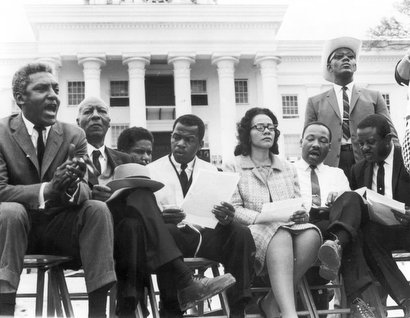
As the nation prepares to commemorate the 50th anniversary of the 1963 March on Washington, the late civil rights organizer Bayard Rustin is finally receiving some of the recognition that he has long deserved.

Tributes to Legendary Black Gay Civil Rights Leader Bayard Rustin

Bayard Rustin was an unyielding activist for civil rights, dignity, and equality for all. An advisor to the Reverend Dr. Martin Luther King, Jr., he promoted nonviolent resistance, participated in one of the first Freedom Rides, organized the 1963 March on Washington for Jobs and Freedom, and fought tirelessly for marginalized communities at home and abroad. As an openly gay African American, Mr. Rustin stood at the intersection of several of the fights for equal rights.

Rustin was openly gay in the 1950s and early 1960s—even in the South. That is an incredible profile in courage.  It's generally regarded that Rustin's open sexuality—which was very rare for his generation—is the reason why many of his accomplishments have been ignored or minimized by historians.

Freedom Rides, organized the 1963 March on Washington for Jobs and Freedom, and fought tirelessly for marginalized communities at home and abroad. As an openly gay African American, Mr. Rustin stood at the intersection of several of the fights for equal rights.

READ: President Barack Obama's Statement on DOMA Ruling
This ruling is a victory for couples who have long fought for equal treatment under the law; for children whose parents’ marriages will now be recognized, rightly, as legitimate; for families that, at long last, will get the respect and protection they deserve; and for friends and supporters who have wanted nothing more than to see their loved ones treated fairly and have worked hard to persuade their nation to change for the better.