
A JPG of the flights and WRS2 is available from <here>
HyspIRI Mission Study
Activities relating to the HyspIRI airborne
In 2013 and 2014 NASA will conduct airborne campaigns for the HyspIRI mission. For these campaigns, NASA will fly the Airborne Visible/Infrared Imaging Spectrometer (AVIRIS) and the MODIS/ASTER Airborne Simulator (MASTER) instruments on a NASA ER-2 aircraft to collect precursor datasets in advance of the Hyperspectral Infrared Imager (HyspIRI) mission. The primary goal of this activity is to demonstrate important science and applications research that is uniquely enabled by HyspIRI like data, taking advantage of the contiguous spectroscopic measurements of the AVIRIS, the full suite of MASTER TIR bands, or combinations of measurements from both instruments.
NASA solicited proposals for investigators to participate in these campaigns. NASA received 49 proposal and selected 14.Data will be acquired over large blocks of California as part of these campaigns shown in the figure below.
1. What time of day will the data be acquired? Typically between 10 am and 4 pm but this will depend on the season since we want to maximize the signal to noise.
2. Have the locations of these lines been finalized? Almost, the science team is currently finalizing the lines, typically extending a few of the lines to make sure key locations are covered.
3. Can anyone get the data? Yes, Level 1 (radiance at sensor) and Level 2 (reflectance, temperature, emissivity) data will be made freely available over the web.
4. Where do I get the data? The data will be available through the AVIRIS and MASTER websites.
5. Will there be any night flights? Yes a small number of hours are reserved for night flights.
6. Will there be any flights over fires (prescribed or natural)? Yes a small number of hours are reserved to acquire data over fires.
7. What pixel sizes will the data have? AVIRIS will have 20 m pixels and MASTER will have 50 m pixels.
8. What swath widths will the data have? AVIRIS will have an 11 km swath and MASTER will have a 35 km swath.
9. What plane will the instruments be mounted on? Both instruments will be on the ER2 which will acquire data from 20 km.
10. Which investigators were selected from the ROSES call?
11. Which order will the boxes (regions) be flown. The order will depend on the weather but the default order is:
1) Southern California; 2) Santa Barbara ;3) San Francisco Bay; 4) Yosemite ; 5) Lake Tahoe
12. How can I find out the current weather for planning purposes? Try these sites:
Current Forecast - US
Geostationary satellite images - US
Model and Analysis Data for Current Forecast
NOAA/ National Weather Service
Airborne Visible InfraRed Imaging Spectrometer. AVIRIS
Thermal Emission Spectrometer Project
 TES Discoveries

The Mars Student Imaging Project (MSIP) is a nationally recognized award winning authentic inquiry-based learning and student-centered education project. Students learn how science works by engaging in science research using data from a NASA spacecraft orbiting Mars. Students understand how science really works by actually being a scientist.
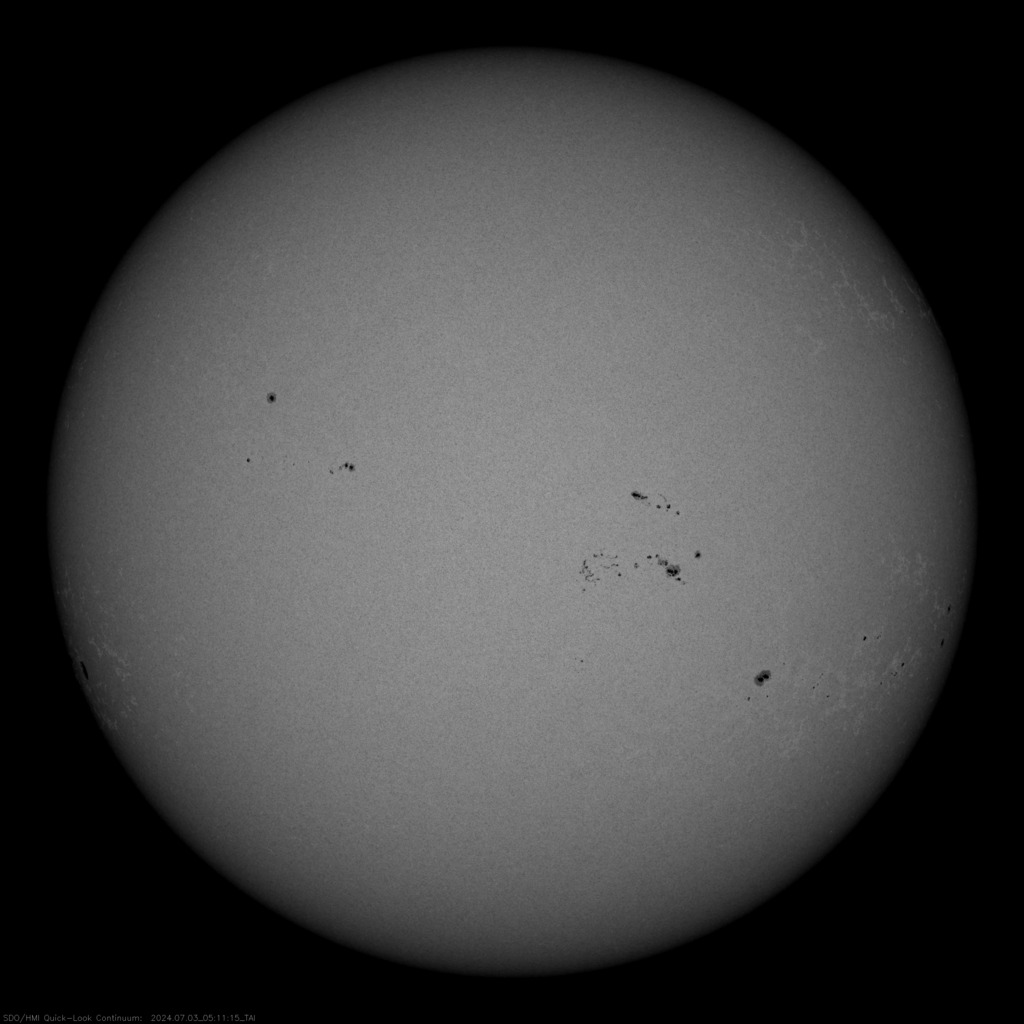
Camilla Space Weather Project
 |
| Space Weather Forecast - Part A |
Observe and Infer.
Observation and Inference. Scientists must make observations, or collect unbiased data before making conclusions about their hypothesis. Often scientists never actually get confirmation that their answer is the “right” one, rather a “good” answer is one that is based on evidence. During the mystery box activity there will be many teachable moments to discuss this idea.
observations are what you see/hear/feel/etc… and
inferences are more like opinions – what they think based on what they observed;
inferences – what do they think happened in
that scene? Encourage thinking outside the box, for example, the bird may have flown
away, or is sitting in a tree, or the fox may have given it a ride rather than eaten it.
When students ask if their inferences are correct, if they “got it right,” ask them if
scientists doing research have a teacher that they can ask for the answer. This usually
drives them nuts, but it’s a good teachable moment to show them that there isn’t always a
right answer, and if there is there isn’t always immediate confirmation.
National Educational Technology Standards for Students (NETS-S):
• 3.a. Students use technology tools to enhance learning, increase productivity, and promote
creativity.
• 5.a. Students use technology to locate, evaluate, and collect information from a variety of
sources.
• 5.b. Students use technology tools to process data and report results.
• 6.a. Students use technology resources for solving problems and making informed
decisions
Researching past solar missions
Space Weather Forecast - Main Lesson
How is the global earth system changing?
How will the Earth system change in the future?
What are the sources of change in the Earth system and their magnitudes and trends?
How can Earth system science improve mitigation of and adaptation to global change?
Freedom of Information Act


